


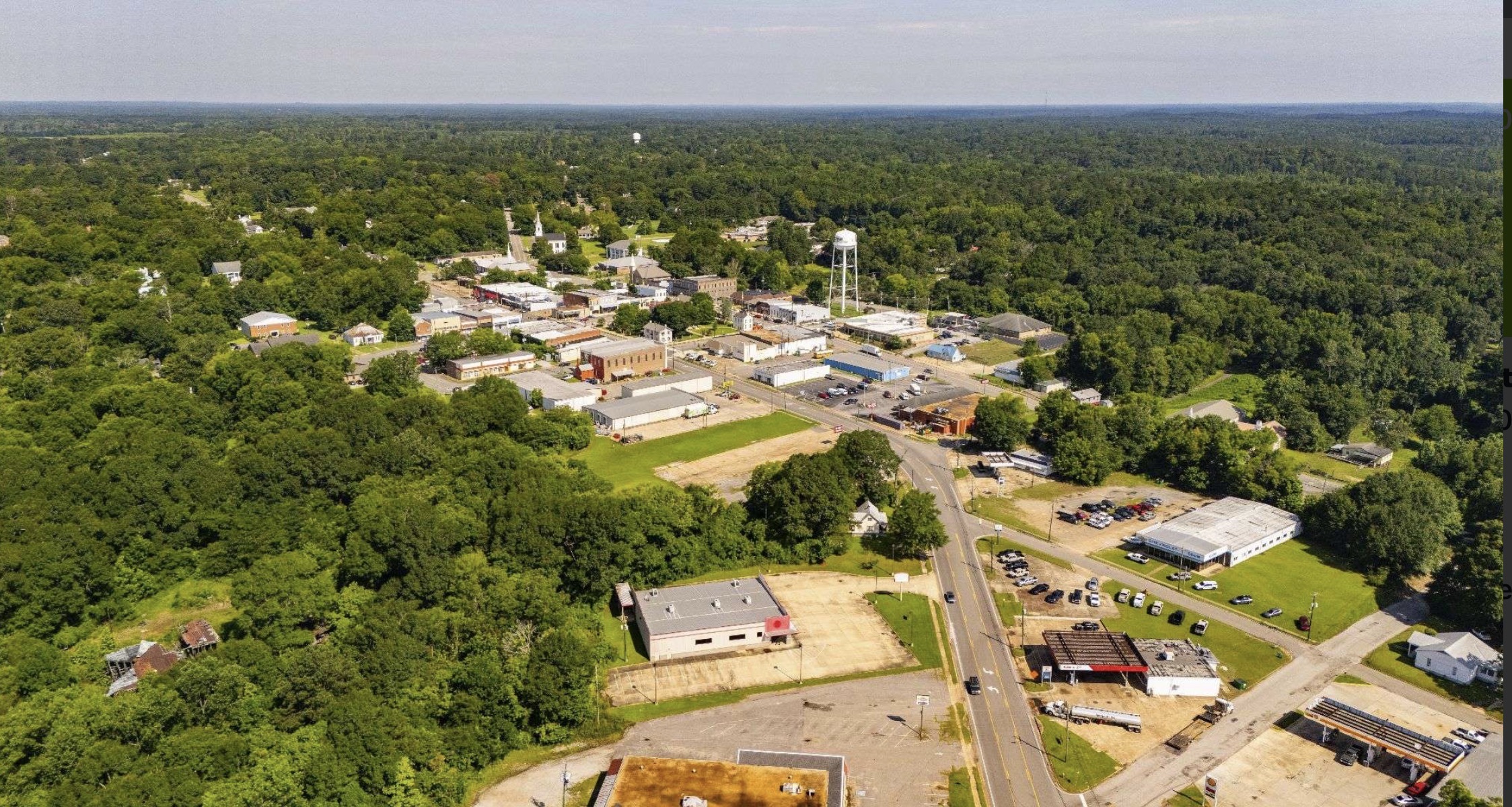
What the data actually says about the smallest county in Alabama — and what residents are right to feel that the numbers don’t capture.
If you ask ten people in Greene County what’s happening here, you will get ten answers, and most of them will be partly true. The county is shrinking. The county is investing. The schools are struggling. The schools are improving. Greene Track is the future. Greene Track is the past. All of these can be true at the same time, and a serious local newspaper has to be willing to say so.
This article lays out what the public data shows about Greene County in 2025 — population, income, employment, education, housing, public safety — and notes where the numbers and the lived experience of residents diverge. It is the first article in our Greene County 101 series, intended as a baseline reference that we will update annually.
Population: smaller every year
Greene County had 7,730 residents in the 2020 Census. By 2024, the U.S. Census Bureau’s annual estimate placed the population at roughly 7,127, a decline of approximately 8 percent in four years. The Census Bureau’s 2025 estimate placed the population at 7,0671. Greene County is the least populated of Alabama’s 67 counties. The trajectory matches a longer pattern: 9,974 residents in 2000, 9,045 in 2010, 7,730 in 2020.
The decline is not uniform. The county’s age profile has shifted older, with residents 65 and over now making up more than a quarter of the population. The under-18 population has fallen sharply. The driver is younger residents leaving — for Tuscaloosa,
Birmingham, and out-of-state metro areas — for work, college, and housing. This is a Black Belt pattern, not a Greene County anomaly. Sumter, Wilcox, Perry, and Lowndes counties show similar curves.
Income and poverty: among the most challenging in the state
Median household income in Greene County is approximately $29,200, compared with roughly $64,000 statewide and roughly $81,000 nationally2. The poverty rate is approximately 36 percent — about three times the national average. Child poverty is higher still; recent estimates place child poverty well above 45 percent.
These numbers are blunt instruments. They do not capture informal economies, family support networks, or the cost-of-living advantages of rural Alabama, where housing is significantly cheaper than in metro areas. They also do not capture the way poverty compounds — limited broadband access, limited health-care access, limited grocery options. Both things are true: the county is poorer than the averages suggest in some ways, and more resourceful than they suggest in others.
Employment: a small labor force, concentrated in a few sectors
The county’s civilian labor force is roughly 2,400 people. The largest employment sectors are manufacturing (around 530 employees), public administration (around 290), and educational services (around 270). Health care, retail, and accommodation/food service round out the next tier. The highest-paying sectors by mean wage are arts/entertainment/recreation — which in Greene County tracks Greene Track — finance and insurance, and professional services.
That concentration is the structural fact that everything else flows from. A county whose labor market depends on a small number of large employers is a county where any one employer’s decisions reverberate. When Greene Track expands or contracts, when the school system hires or freezes, when a manufacturer adds a shift, the effect on the local economy is immediate.
Education: the district most residents attended
Greene County School System operates a small number of schools serving roughly 800 students. State report-card data over the last several cycles has placed the district near the
bottom of Alabama systems on standardized measures. Residents and educators we interviewed for this piece pointed to teacher recruitment and retention, facility age, and the
share of students arriving with significant out-of-school challenges as the most-cited factors. They also pointed to dedicated teachers, a tight community around the schools, and a recent uptick in extracurricular and athletic offerings as reasons for measured optimism.
We will cover the district closely on the Schools beat. The first standing piece will be a quarterly report-card explainer that translates the state data into plain English.
Public safety: a sheriff’s office stretched thin
The Greene County Sheriff’s Office is the primary law enforcement agency for the unincorporated county and works in coordination with municipal police in Eutaw and the smaller
towns. Crime data at the county level is a perennial reporting challenge — not because data does not exist, but because reporting practices vary across agencies and across years. We are filing a series of public records requests to develop a consistent multi-year picture, and we will publish what we find. Until then, residents who want a current view should attend commission meetings, where sheriff’s reports are typically delivered.
What the numbers don’t capture
Three things, in our reporting, the public data systematically understates. First, the strength of church and family networks. Second, the volume of informal economic activity — yard sales, side businesses, mutual aid — that doesn’t show up in employment statistics. Third, the depth of community knowledge. People in Greene County know each other across generations in a way that numbers do not measure. None of this is a substitute for the structural challenges. All of it matters.
1 Works Cited
1. “Greene County, Alabama — Census QuickFacts.” 2025. Open source